- Softplanet Productions | Music Education, Piano Improvisation & Scores/
- Tutorials & Music Guides/
- Yamaha P-45, P-225 or P-525: Find Your Piano Match/
Yamaha P-45, P-225 or P-525: Find Your Piano Match
By John Montgomery
The right piano makes you want to sit down and play. Perhaps that means a straightforward instrument for your first chords, a compact keyboard for rehearsals, or a more substantial action for exploring every shade of a favourite piece.
Yamaha’s P-45, P-225 and P-525 offer three different approaches. All have 88 weighted keys and built-in speakers, but their touch, sounds and carrying weight give each a distinct appeal.
These are portable digital pianos that can also be used for performances. This is a comparison based on Yamaha’s published specifications, rather than a hands-on test of the three instruments.
The differences at a glance #
| Feature | P-45 | P-225 | P-525 |
|---|---|---|---|
| Keyboard action | Graded Hammer Standard (GHS) | Graded Hammer Compact (GHC) | GrandTouch-S; wooden white keys |
| Main piano sound | AWM stereo sampling | Yamaha CFX | Yamaha CFX and Bösendorfer Imperial |
| Maximum polyphony | 64 notes | 192 notes | 256 notes |
| Weight | 11.5 kg | 11.5 kg | 22 kg |
| Main attraction | Simplicity | Compact size with more musical options | More elaborate piano action and sound features |
Polyphony is the number of notes an instrument can sound simultaneously. Sustain and layered voices use that capacity too; the bigger numbers give more headroom, rather than telling you how many keys you can press!
P-45: keep the focus on playing #

There is something appealing about an instrument that gets out of your way. The P-45 offers ten voices and a GHS action, with heavier weighting towards the bass and lighter weighting towards the treble.
For someone working on chords, coordination and a reliable practice habit, that straightforward setup can be a strength. You can spend your session making music without first exploring a long list of settings.
Our take: it is worth considering when simplicity matters and the actual asking price makes sense. Compare local offers and alternatives before deciding; a familiar model name alone does not establish good value.
P-225: a compact musical companion #
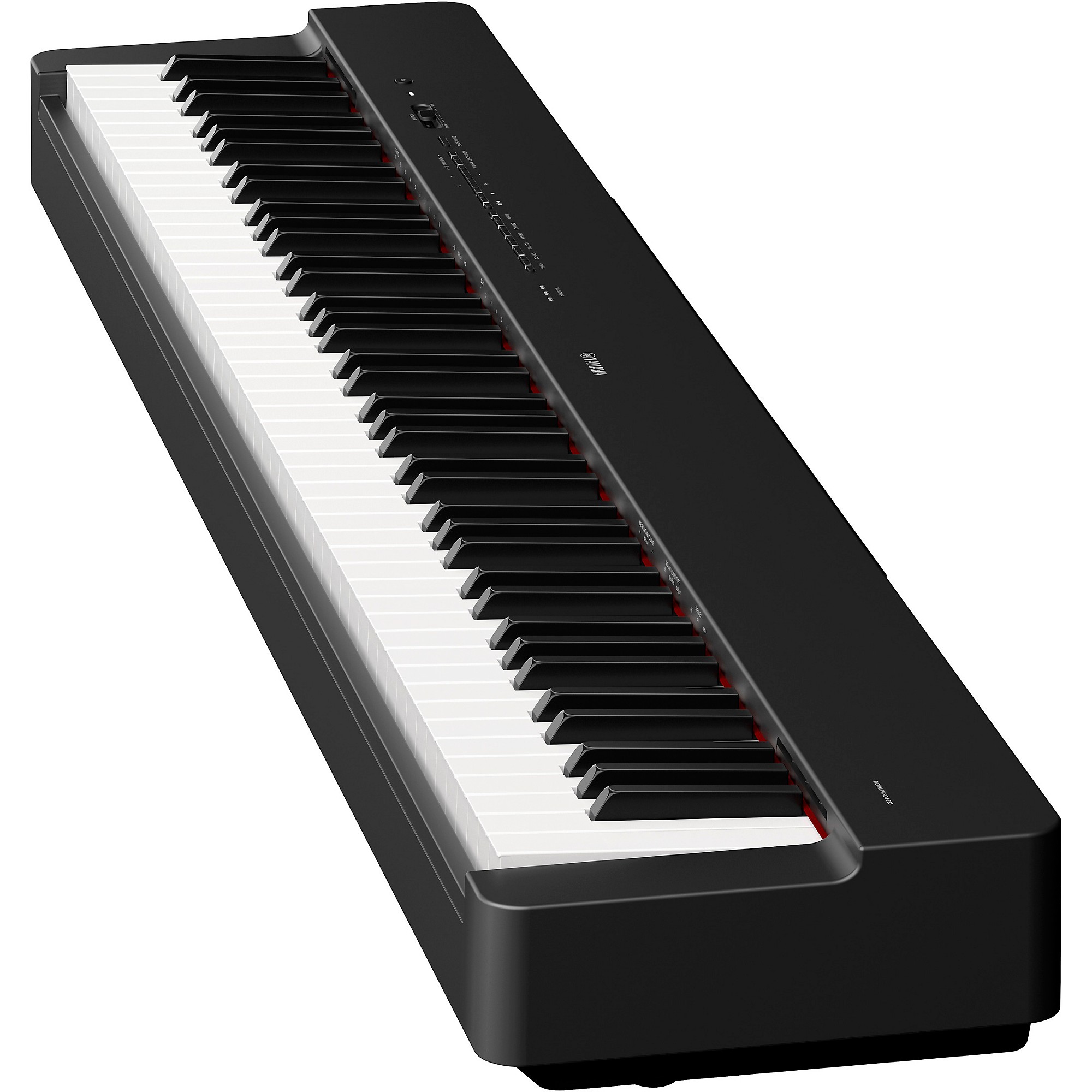
The P-225 pairs Yamaha’s CFX piano sound with the GHC action. It has 24 voices, split and layer functions, and VRM Lite resonance modelling. That gives you more scope to move between solo piano, a layered texture and a keyboard part for a rehearsal.
At 11.5 kg, it weighs the same as the P-45, while its cabinet is shallower. If your piano shares a room with everyday life—or travels to rehearsals—that is a practical benefit.
Our take: a promising middle option for players who want more flexibility in a compact instrument. Try the action yourself: its compact design does not tell you whether it will suit your hands better than another keyboard.
P-525: put touch and expression first #
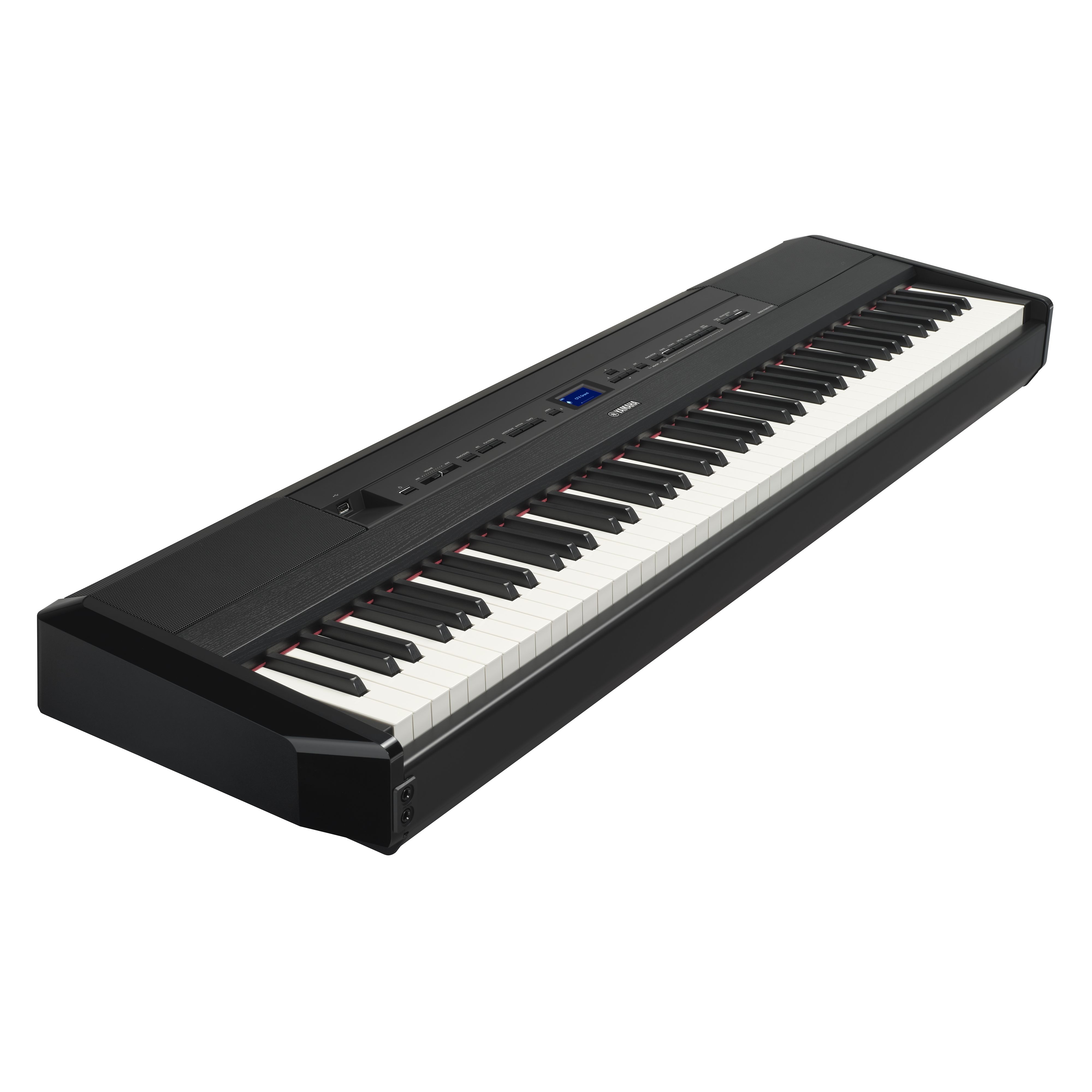
The P-525 offers GrandTouch-S action with wooden white keys, synthetic ebony and ivory key surfaces, and escapement. Its piano voices include Yamaha CFX and Bösendorfer Imperial, with additional resonance and expression modelling features.
For headphone practice, Yamaha specifies binaural sampling for the CFX Grand voice. That detail matters: it should not be read as a claim that every piano voice uses binaural sampling.
The practical trade-off is weight. At 22 kg before a case or stand, this is a different carrying proposition from the other two.
Our take: consider it if detailed piano playing is your priority and the feel justifies the extra cost and weight for you. No specification can promise that an action will feel exactly like your favourite acoustic grand.
Give each piano the same five-minute audition #
Take a short piece you know well and use it on every instrument. Play a gentle phrase, repeat it more firmly, then try a few chords with the sustain pedal. Listen through speakers and your own headphones if possible.
Ask yourself:
- Can I control quiet notes comfortably?
- Does the touch encourage me to shape the phrase?
- Are the sounds and controls useful for the music I actually play?
- Can I manage the instrument, stand and case when travelling?
Check the full purchase cost too: a suitable stand, bench, pedal and transport protection can change the comparison. Prices and availability vary by country and retailer, so confirm the current offer and what is included.
Make your next step a musical one #
A new piano is exciting, but a clear reason to play it is even better. Choose a short tune, learn its chords and make a small variation of your own. That is a satisfying first session on any instrument.
If you would like help developing that freedom, explore our Modern Piano Improvisation course. For something to put on the music rest, browse our piano scores.
Manufacturer references #
Specifications checked on 26 October 2026: Yamaha P-45, P-225 and P-525. The buying suggestions above are our editorial interpretation of those specifications.